
Find Hoonah-Angoon Sex Offenders
Hoonah-Angoon Census Area sex offender searches should begin with the statewide registry, then shift to Alaska State Troopers coverage and state law pages when you need more context. This part of Southeast Alaska is remote, and that shapes the search. Many communities rely on troopers first. Local files are thinner than they are in a city. So the best path is simple. Start with the registry, keep the place name exact, and use the state tools to confirm what the public record really says.
Hoonah-Angoon Sex Offender Registry
The Alaska Sex Offender Registry at sor.dps.alaska.gov is the main public search tool for Hoonah-Angoon Census Area. It gives you the statewide record and keeps the search on an official source. That matters in a remote census area where a person may be tied to a village name, a mailing label, or a nearby community that uses a different local pattern. The registry helps you sort those small shifts without guessing.
The Southeast Alaska report from DPS at Felony-Level Sex Offenses 2024 places Hoonah-Angoon inside the same regional group as Haines, Juneau, Petersburg, and other nearby communities. That report is not a local case file, but it is a useful frame. It shows the area as part of a wider state pattern, with Alaska State Troopers A Detachment covering remote communities in the region.
This Hoonah-Angoon Census Area image comes from the Alaska Sex Offender Registry at sor.dps.alaska.gov.
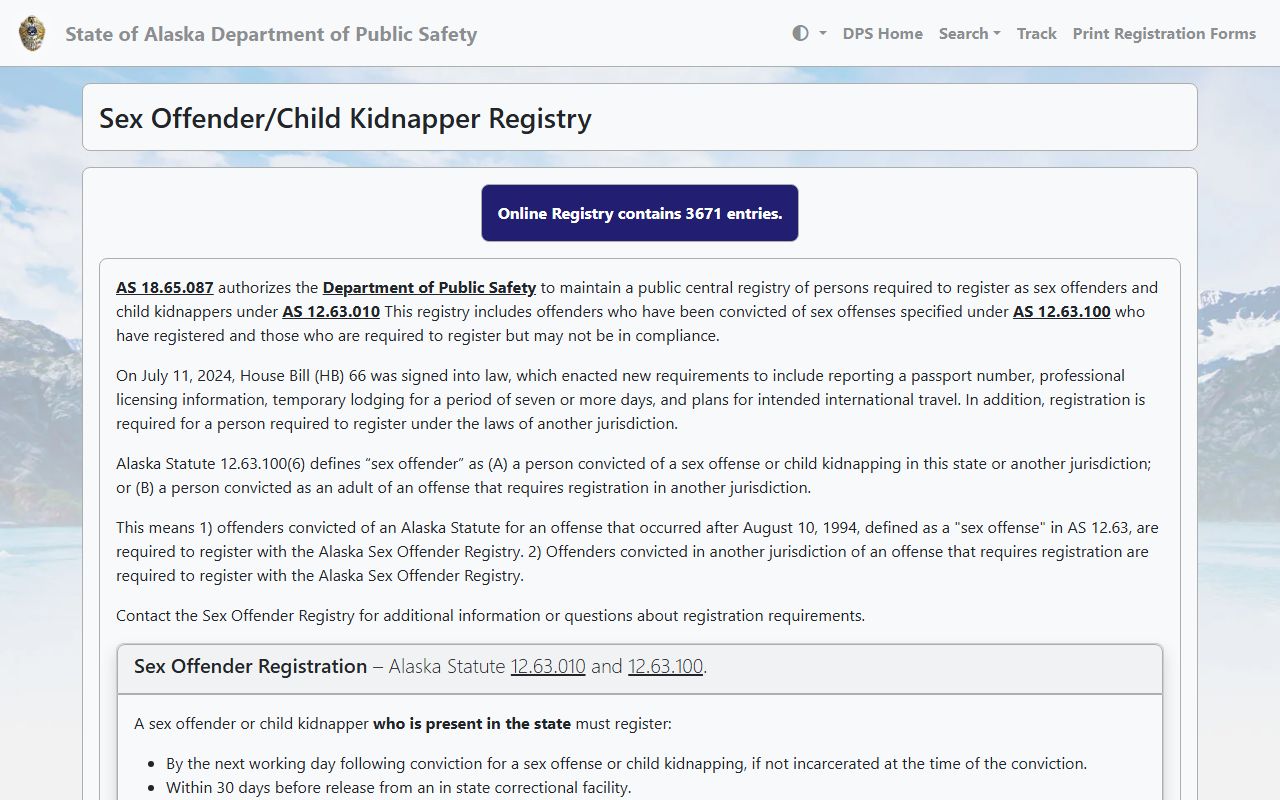
That is the strongest fallback for this page because there is no local county image to use. It keeps the page tied to the official registry instead of a copied summary.
In a place this spread out, the registry is more than a list. It is the anchor point. It gives you the public record first, then lets you compare the name, the location, and the status with the rest of the state sources.
Hoonah-Angoon Sex Offenders Records
Records in Hoonah-Angoon often need a state-first approach. Alaska State Troopers handle much of the local public safety coverage for remote communities, so the path from a registry result to a local record can feel indirect. That is normal here. The search is not broken. It is just spread across a wider map. When that happens, keep the record type clear. A registry entry, a notice record, and a police contact are not the same thing.
VINELink at vinelink.dhs.gov can help if you are trying to follow custody or notice status tied to a related case. It does not replace the registry. It adds another public safety layer. That can be useful when the local trail is thin and you want to see whether a status update still matches the public record you found in Alaska's registry system.
This Hoonah-Angoon Census Area image comes from VINELink at vinelink.dhs.gov.
That image fits the page because notice and custody questions often sit close to a registry search in remote parts of the state.
The key is to keep the search short and official. Use the registry first. Then use notice or custody tools only if the result needs more context. In a remote census area, a small difference in spelling or place label can change the search fast.
Another way to keep the search sharp is to compare the location label with the kind of record you expect. If the entry points to a village or a community name, make sure the rest of the source trail still supports that result before you treat it as final.
Hoonah-Angoon Sex Offenders and Law
The legal frame behind Hoonah-Angoon searches comes from Title 12, Chapter 63. That chapter explains the registration structure that the public registry follows. It is useful because it shows why the Alaska Department of Public Safety keeps one statewide system for every region, including remote Southeast Alaska communities. The registry is not a loose list. It is part of a legal process with a clear public purpose.
The Alaska Department of Law at law.alaska.gov gives you the state-side source for that structure. It is the right place to confirm the official frame before you lean on a copied summary or a third-party index. In Hoonah-Angoon, that matters more than usual because local offices are spread out and not every community has the same kind of public records access.
This Hoonah-Angoon Census Area image comes from the Alaska Department of Law at law.alaska.gov.
That state image is a good fallback because the Department of Law is part of the same official chain that supports the registry.
The state rules also help explain why the search should stay public and careful. A user looking up Hoonah-Angoon sex offender records needs current status, not a broad guess. Title 12, Chapter 63 and the Department of Law both point toward that kind of accurate search.
Note: In remote Southeast Alaska, the strongest result is usually the one you can confirm on the state registry, then support with law and notice tools if needed.
Hoonah-Angoon Search Paths
Hoonah-Angoon Census Area searches get easier when you keep the location label tight. Use the full census area name first, then compare it with the village or community label in the registry. That helps when a record is tied to more than one place name. It is common in remote areas. It is also why the state registry stays more useful than a copied local summary.
The DPS felony report at dps.alaska.gov/getmedia gives Hoonah-Angoon its Southeast Alaska context. The same report shows the region's shared trooper coverage and nearby communities. That kind of detail helps you understand why a search can lead from one label to another without changing the legal record underneath.
This Hoonah-Angoon Census Area image comes from the Alaska statutes chapter at law.justia.com.
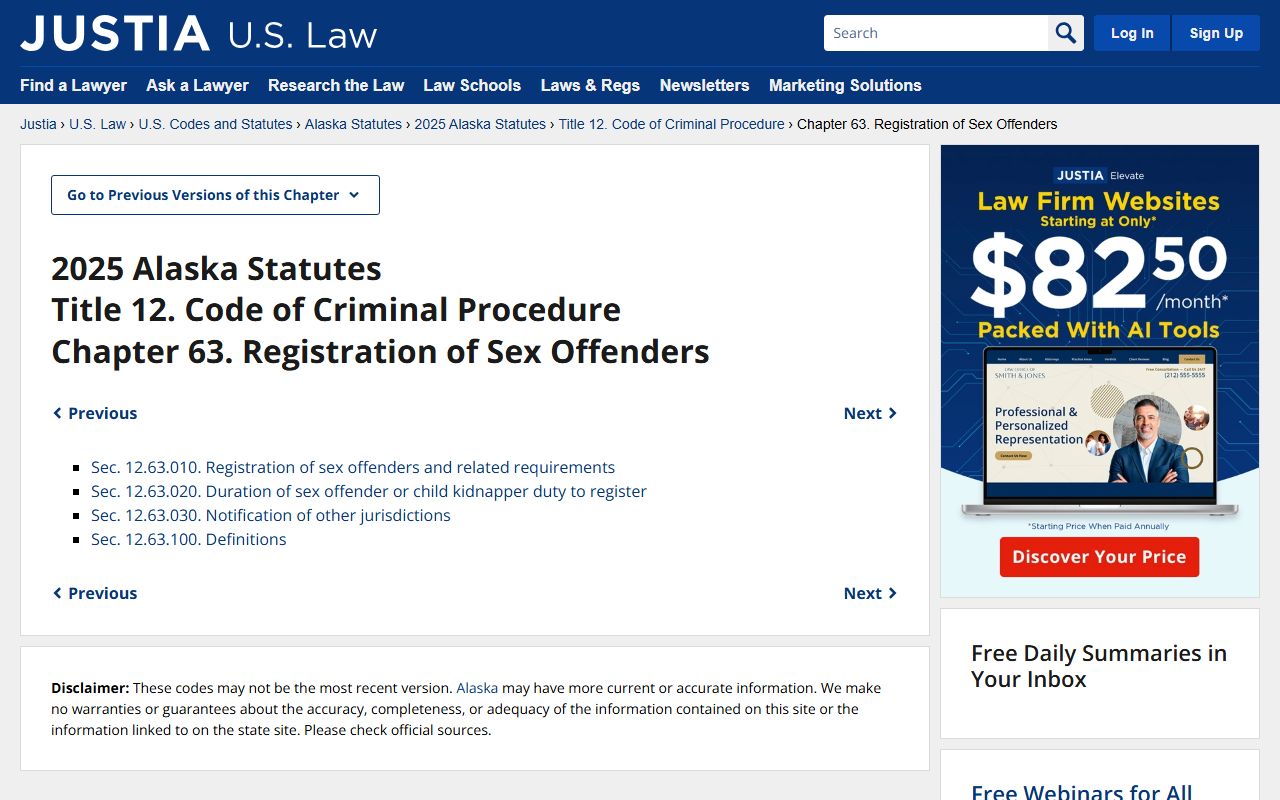
That image is a good fit because the statute chapter is what explains the registry's structure in the first place.
When the search is close but not perfect, check the status, the spelling, and the location label again. Do not jump straight to the first match. In a remote census area, that one extra check can save you from a wrong result.
The same advice applies to notice tools. VINELink can help, but only if you already know the record you are looking at belongs to the right person and the right case.
Hoonah-Angoon Records and Status
Hoonah-Angoon sex offender records are most useful when you treat them as living public records. They can change. The state registry shows the current public entry, and related notice tools can show whether custody or release status has moved. That is why the page leans on state sources rather than a static summary. The record is more trustworthy when you can see it at the source.
Because Alaska State Troopers cover much of the area, the local public safety path can feel broad. That does not make it vague. It just means the registry and state law do more of the work here. If you keep the search focused on those pieces, the result is usually cleaner and faster to confirm.
The safest habit is simple. Search the registry, check the law, and then use VINELink if you still need a status cross-check. That order works well in Hoonah-Angoon because the area is remote and the public record trail often stretches across more than one community label.
Hoonah-Angoon Census Area sex offender searches do not need to be complicated. They just need to stay close to the official chain. When you do that, the result is easier to trust.