
Search Chugach Sex Offenders
Chugach Census Area sex offender searches work best when you start with the state registry and then compare what it shows with the local place name you already know. This part of Southcentral Alaska stretches across a wide area, so a clean search depends on careful checks for name, location, and zip code. Alaska State Troopers E Detachment and municipal police in the communities within the census area can add context, but the statewide registry stays at the center of the search. That is the fastest way to confirm a public record without drifting into guesswork.
Chugach Census Area Sex Offender Registry
The main public tool is the Alaska Sex Offender Registry at sor.dps.alaska.gov. It lets you search Chugach Census Area entries by name, location, or zip code, which is useful when a record sits in a community that does not match your first guess. The registry is the safest place to start because it gives you the current public listing before you move to any local page or secondary summary. For a broad search, that matters more than speed. A quick result that points to the wrong person only adds work later.
The Southcentral Alaska region in the DPS felony report at dps.alaska.gov/getmedia includes Chugach Census Area along with other nearby places in the same state reporting zone. That report shows why the area is tied to Alaska State Troopers E Detachment and why the law enforcement path can include more than one community office. Communities such as Seward, Soldotna, Cooper Landing, Ninilchik, and Anchor Point help show the size of the region and the way local police support the broader state record trail.
This Chugach Census Area image points back to the statewide registry at sor.dps.alaska.gov.
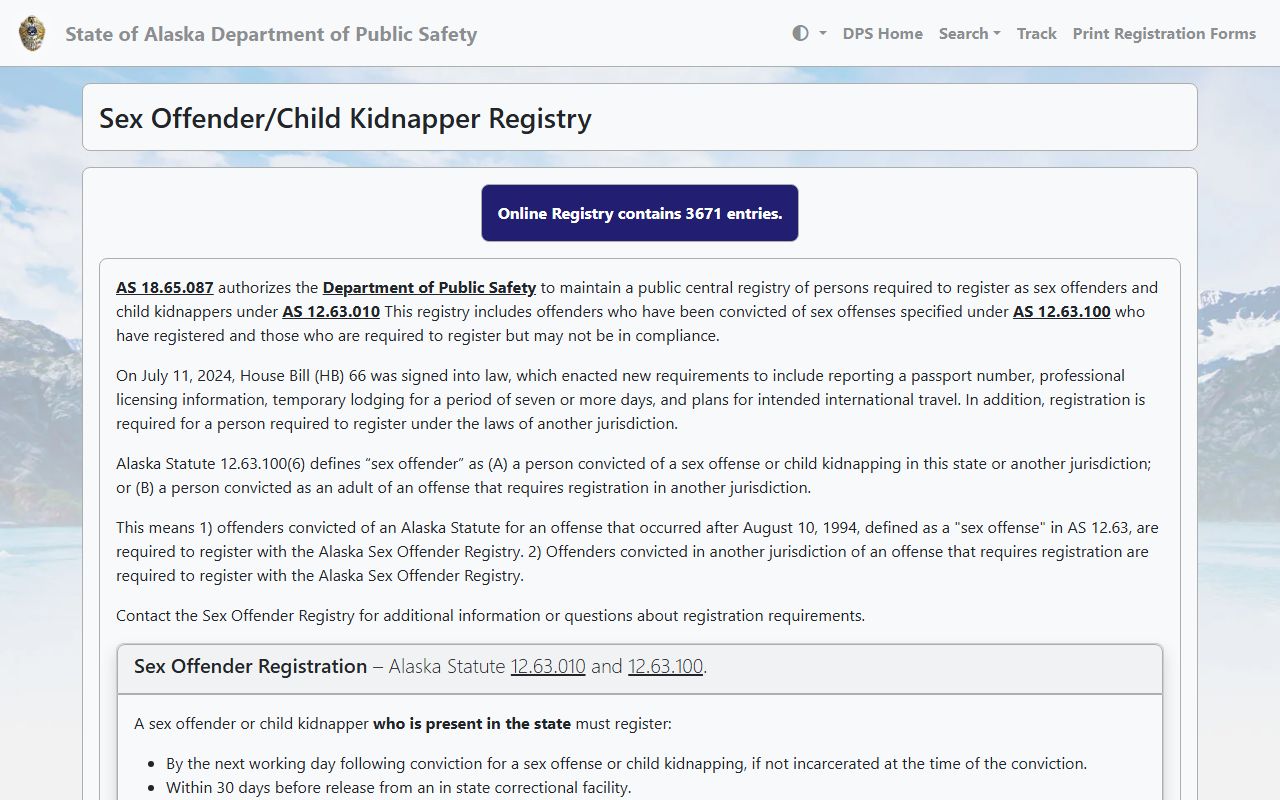
That official registry source gives the page a clean anchor. It keeps the search tied to live state data instead of a copied listing that may already be stale.
The same location may appear under slightly different labels in outside directories, which is one more reason to return to the official state source and confirm the result before relying on it.
When the location is broad, the search should be narrow. Use the exact name, then compare the address or zip against the current entry. A small shift in spelling or a wrong town label can send you in the wrong direction fast.
Chugach Census Area Sex Offenders Records
Registry results and related records do different work. The registry tells you who is listed. A records page or law page helps you read the public trail behind that entry. For Chugach Census Area, the Alaska Department of Law at law.alaska.gov is a useful state-level guide because it keeps you close to the official source chain. If you are checking a result that needs more than a name and status, the law page helps show how the public record system is set up.
Alaska's registration rules are set out in Title 12, Chapter 63. That chapter explains the structure behind the public registry and shows why state-level searches stay central even when a county or city has its own local police presence. In Chugach, that is useful because the public record trail can pass through state troopers, municipal police, and the registry itself before you get a full picture.
This Chugach Census Area image points to Alaska statutes in Title 12, Chapter 63.
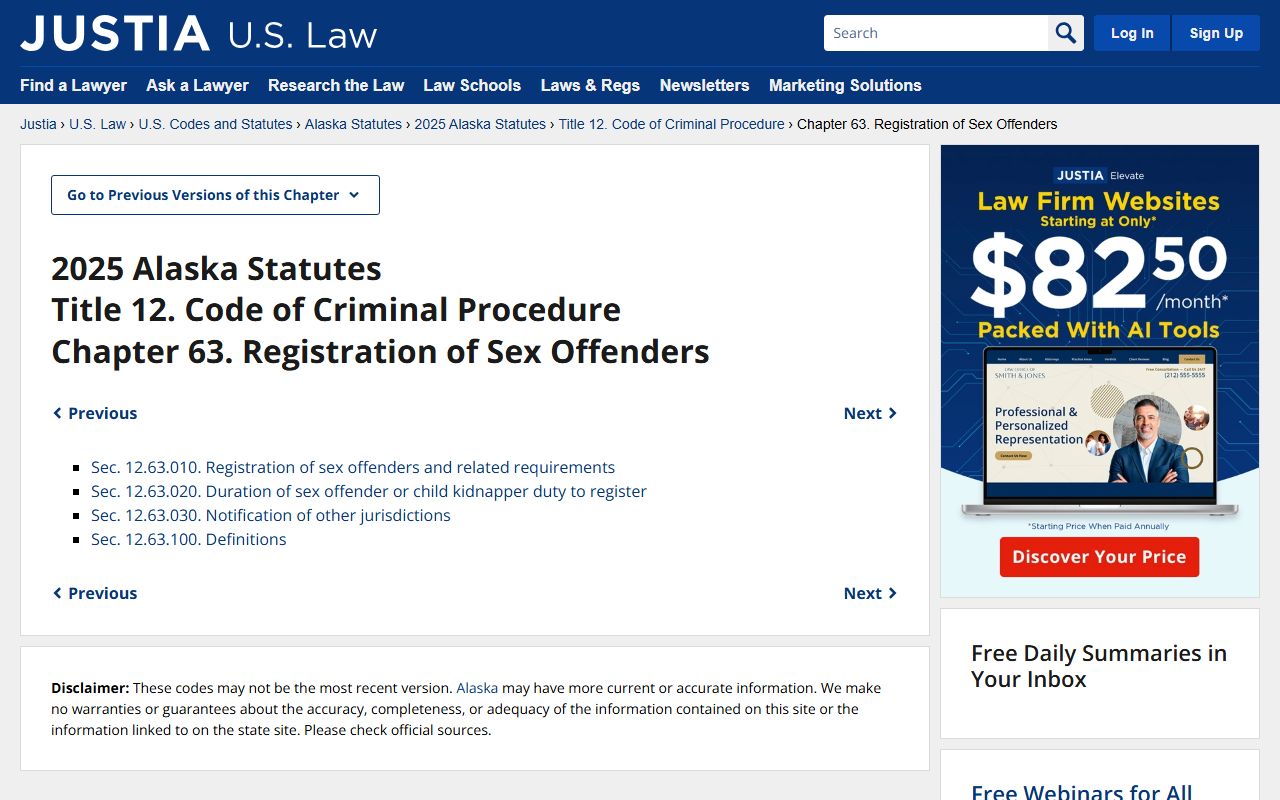
That statutes image works well on this page because the legal frame is what gives the registry its shape. The page stays useful when the law and the search result line up.
Local police departments in Chugach communities can still matter for context, but they do not replace the registry. They help explain where a record fits, while the state page gives you the official public view. That is the better order for a search.
Chugach Census Area Sex Offenders and Status
VINELink at vinelink.dhs.gov is a practical follow-up tool when a search needs custody or notice context. It does not replace the Alaska registry. It helps you see whether a related status update still matches the public record you found. That can be useful in a wide area like Chugach, where a case may move through a state office before it shows up in a local setting. The point is not to add more noise. The point is to confirm the result.
The Alaska Department of Law at law.alaska.gov also helps keep the search grounded. If the registry entry and the notice tool seem to point in the same direction, you can trust the result more. If they do not, slow down and check the spelling, the address, and the community name again. Chugach search work rewards careful checks because the census area covers so much ground.
This Chugach Census Area image points to VINELink at vinelink.dhs.gov.
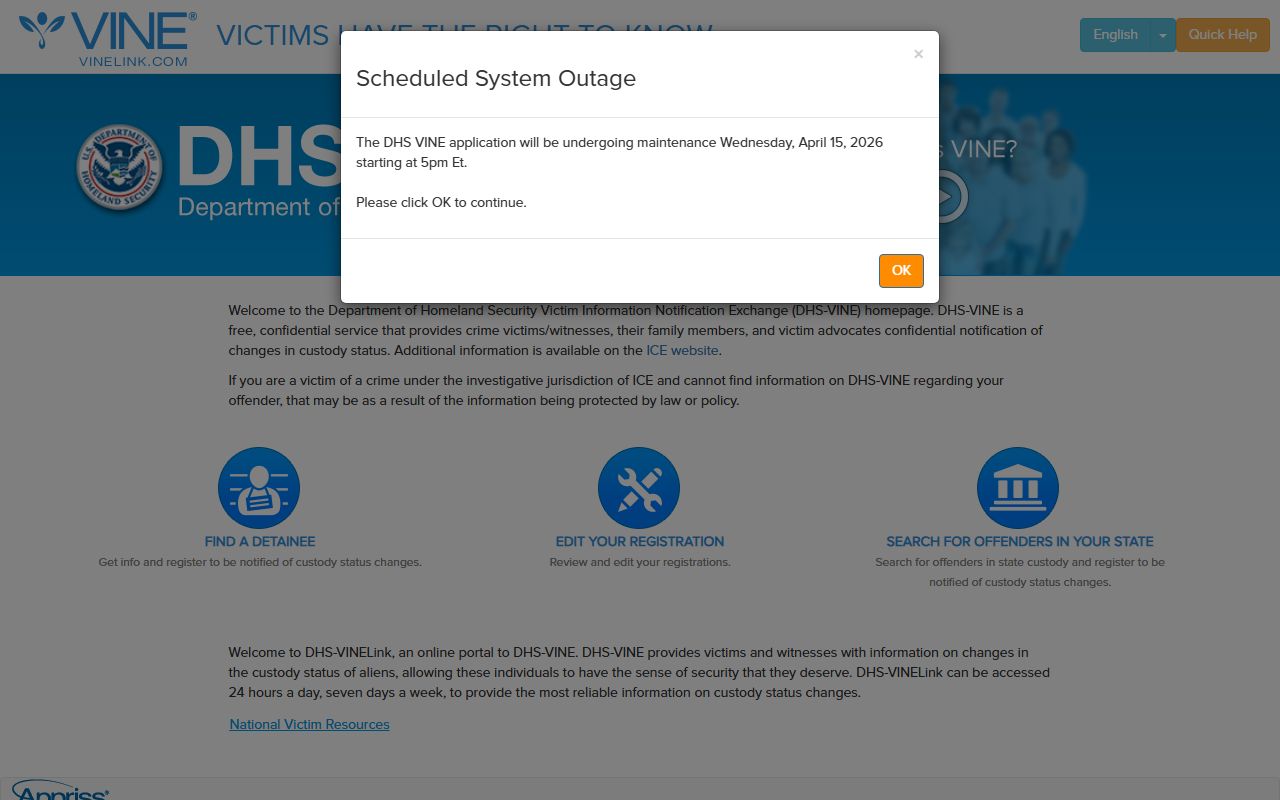
That notice image adds a clear status layer. It is useful when you are checking whether a public safety update still matches the registry entry.
Note: In Chugach, the best search result is usually the one you can confirm twice, first on the registry and then with a state notice or law source.
That approach keeps the search clean. It also helps you avoid treating a close match as the right one when a broader Southcentral record trail is involved.
Chugach Census Area Search Tips
Chugach Census Area sex offender searches improve when you keep the place name exact. Start with the census area name, then compare the registry result with the community label you expect. Use name, location, and zip code together if the first pass does not look right. That is a simple habit, but it saves time. The registry search can move quickly, and one wrong spelling can point you at the wrong public entry before you notice it.
The Southcentral Alaska region adds another layer. Because the census area sits inside a wide regional pattern, the same person may appear in a record trail that also touches nearby places with local police departments. That does not mean the record is unclear. It just means the search needs to stay focused on the official registry first, then on state law and notice tools second.
Chugach searches also work better when you treat every source as a check, not a shortcut. The registry gives you the current listing. The Department of Law gives you the official state frame. Title 12, Chapter 63 tells you how the public system is built. VINELink can add the last bit of status detail if you need it. When those pieces agree, the result is much easier to trust.
If the first result looks thin, do not jump to a new source too fast. Stay with the same name, the same area, and the same state system. That keeps the search steady and makes the final answer stronger.