
Anchorage Sex Offenders Search
If you need to find Anchorage sex offenders, start with the statewide registry and the Anchorage Police Department's public records tools. Anchorage does not run a separate city registry. People living in the municipality register through SOCRO at 5700 East Tudor Road, while APD points the public to state and city resources that help with searches, records, and safety updates. That gives you a direct path for checking names, locations, and related public files without guessing which office has the record you need.
Anchorage Sex Offenders Registry Basics
The main place to begin is the Alaska Sex Offender Registry at sor.dps.alaska.gov. That registry is the public route for Anchorage sex offenders searches, and it is the system APD uses when people want current statewide information. Anchorage residents and visitors can search by name, map area, or other available filters. The city itself does not keep a separate registry, so the state site stays at the center of the process.
APD also gives the public broader safety tools. Its site at anchoragepolice.com points people toward community resources, victim-services information, and the RAIDS Online crime map. Those tools do not replace the registry, but they help you place a name or address in a wider public-safety context. If you want to understand what is happening in a neighborhood, APD's pages are a practical next stop after the registry search.
Anchorage is unusual in one more way. Offenders who live inside the municipality register directly with SOCRO rather than a local patrol office. That keeps the registry process centralized. It also means Anchorage sex offenders records are easier to track when you know the first stop is the state system, not a city desk. For a local overview, the Municipality of Anchorage site at muni.org is still useful because it connects residents to city services and civic information.
That local setup also helps when the same name shows up in more than one place. A person may appear in the registry, in APD news, and in a separate records request. Anchorage searches work best when you compare those pieces instead of treating any one of them as complete on its own.
A community safety page from Anchorage Police Department shows how registry lookups sit beside wider public-safety work. That is the right frame for Anchorage sex offenders research. You are not looking for a private list. You are using a public state tool and a local police site that keeps the city's safety information in one place.
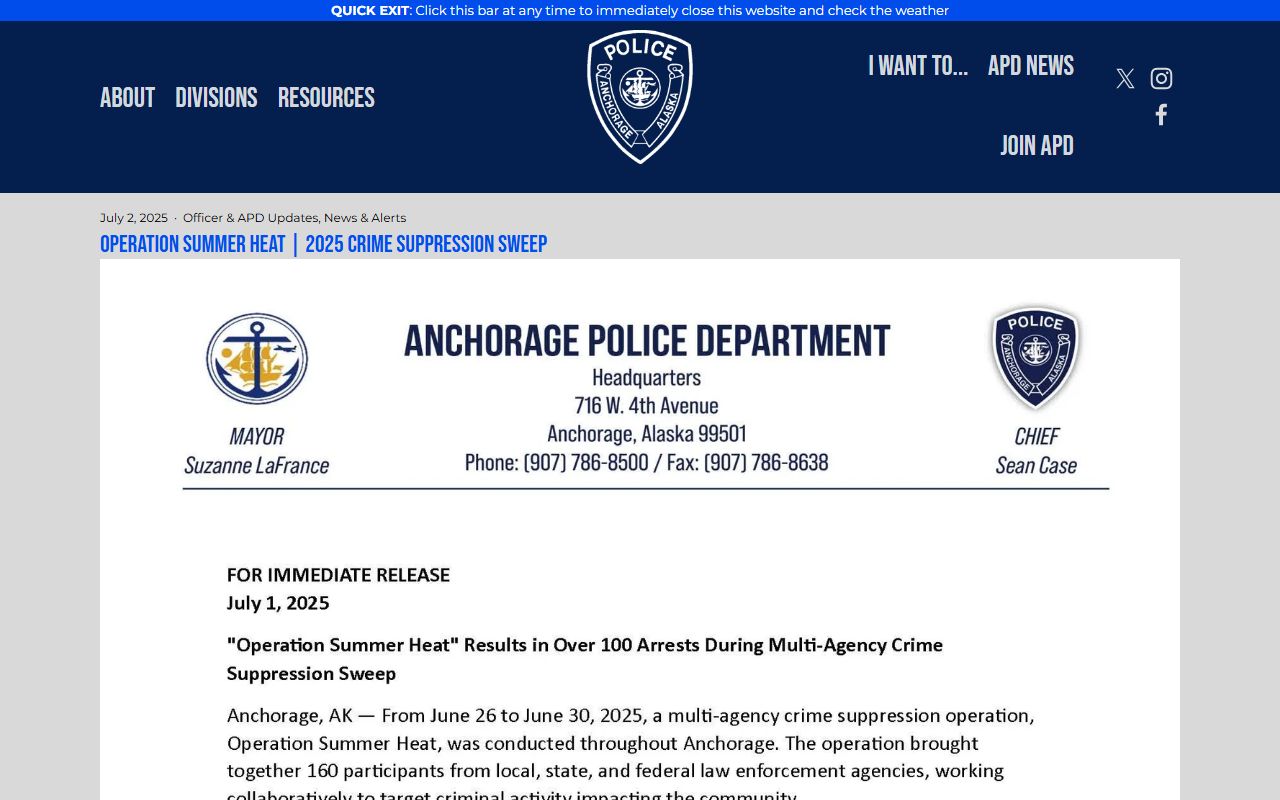
This municipal image supports the same search path. It reinforces that Anchorage sex offenders information is tied to the municipality, the state registry, and APD community resources working together.
Another local APD page at anchoragepolice.com/request-police-records explains how people request reports and related records through the department's online system.
Use this records path when you need incident reports, case documents, or other police files tied to Anchorage sex offenders searches. The APD portal keeps that request flow organized.
Anchorage Police Records Access
The APD records portal at anchoragepolice.com/request-police-records is the main place to request police records or media. APD says documents must be requested separately from audio, video, or photo files, and each request should cover only one case or incident number. That rule helps keep the process clear and keeps the search narrow when you are trying to match a report to a person, date, or event tied to Anchorage sex offenders work.
Some requests need consent forms. APD uses one form for an adult requesting their own records, one for an adult with a guardian, and one for juvenile records. Those forms matter when the file touches a protected record set. They also help the department release only what can be released. If you already know the case number, the search moves faster. If you do not, the portal still gives you a structured way to begin.
Anchorage police records are best read in context. The public records request portal may give you reports, logs, or media that line up with a registry entry, a neighborhood concern, or a police contact history. That does not change the registry rules. It does help you see the person, place, and incident in one frame. For a city this large, that sort of detail can save time and reduce bad matches.
When you need a quick reminder of APD services, the main site at anchoragepolice.com is worth a second look. The site connects records, neighborhood resources, and public-safety updates without forcing you to hunt through unrelated pages. That makes it easier to move from an Anchorage sex offenders search to a police record request when you need more than the registry can show.
Note: Anchorage keeps sex offender registration at the state level, so local records and registry checks work best when you start with the right office.
Anchorage Sex Offenders and State Tools
Two statewide tools are useful when Anchorage sex offenders research goes beyond the city page. The first is NSOPW, the National Sex Offender Public Website. It helps you compare a name or location against more than one jurisdiction. The second is VINELink, which focuses on custody-status changes and victim notification. Together, they fill gaps that the local registry cannot cover by itself.
If you want the legal frame, Alaska Statutes Title 12 Chapter 63 covers the registration rules that sit behind the public search process. The Alaska Department of Law at law.alaska.gov also matters because it works with criminal prosecution and public legal guidance across the state. Those links are useful when you need to understand why a record appears, why it does not, or how a registration duty is enforced after conviction.
Anchorage sex offenders records are easiest to use when you keep the hierarchy straight. First, check the state registry. Then look at APD records and the municipality's public pages. After that, move to NSOPW or VINELink if you need a wider search or a custody update. That order keeps the search simple, and it keeps you from assuming a city office holds a record that actually lives at SOCRO or in a state database.
For people who search often, the key is not volume. It is precision. Names can repeat. Addresses can change. Status can shift after a new filing or a release event. Anchorage sex offenders searches work best when you verify the latest entry before you rely on it for any public-safety decision.
The APD request portal is also helpful when you need to line up a registry entry with a report or incident file. If the record you want is tied to a specific date or incident number, APD's one-case-per-request rule keeps the file trail clean and easier to follow.
Anchorage Related Records
If you are using this page as a hub, the related Anchorage Municipality page can help you move from a city search to borough-wide records. The nearby Eagle River page is also useful because Eagle River sits inside the Anchorage service area and uses the same general state registry path. That matters when a search crosses neighborhood lines but stays inside the same municipality.
Anchorage sex offenders research often works best when you pair the registry with one more source. A city record can confirm an incident. A state registry entry can confirm status. A municipal resource can show where to go next. When all three line up, the result is much cleaner. When they do not, the mismatch is a clue that you may have the wrong person or the wrong location.
For a practical search flow, start with the registry, check APD records, then move to the related county and city pages if the name or address points you outside the core Anchorage record set. That keeps the search local while still letting you reach state and municipal resources when needed.